NOVEMBER 21, 2026 · BY AI AGE LABS
A Rocket Just Destroyed 40 of Amazon's Satellites. What It Means for the Race With Starlink.
ULA's Vulcan failed to reach orbit on Nov 15 with 40 Amazon Leo internet satellites on board. Here's what's confirmed, what isn't, and how far Amazon still has to go.
Key takeaways
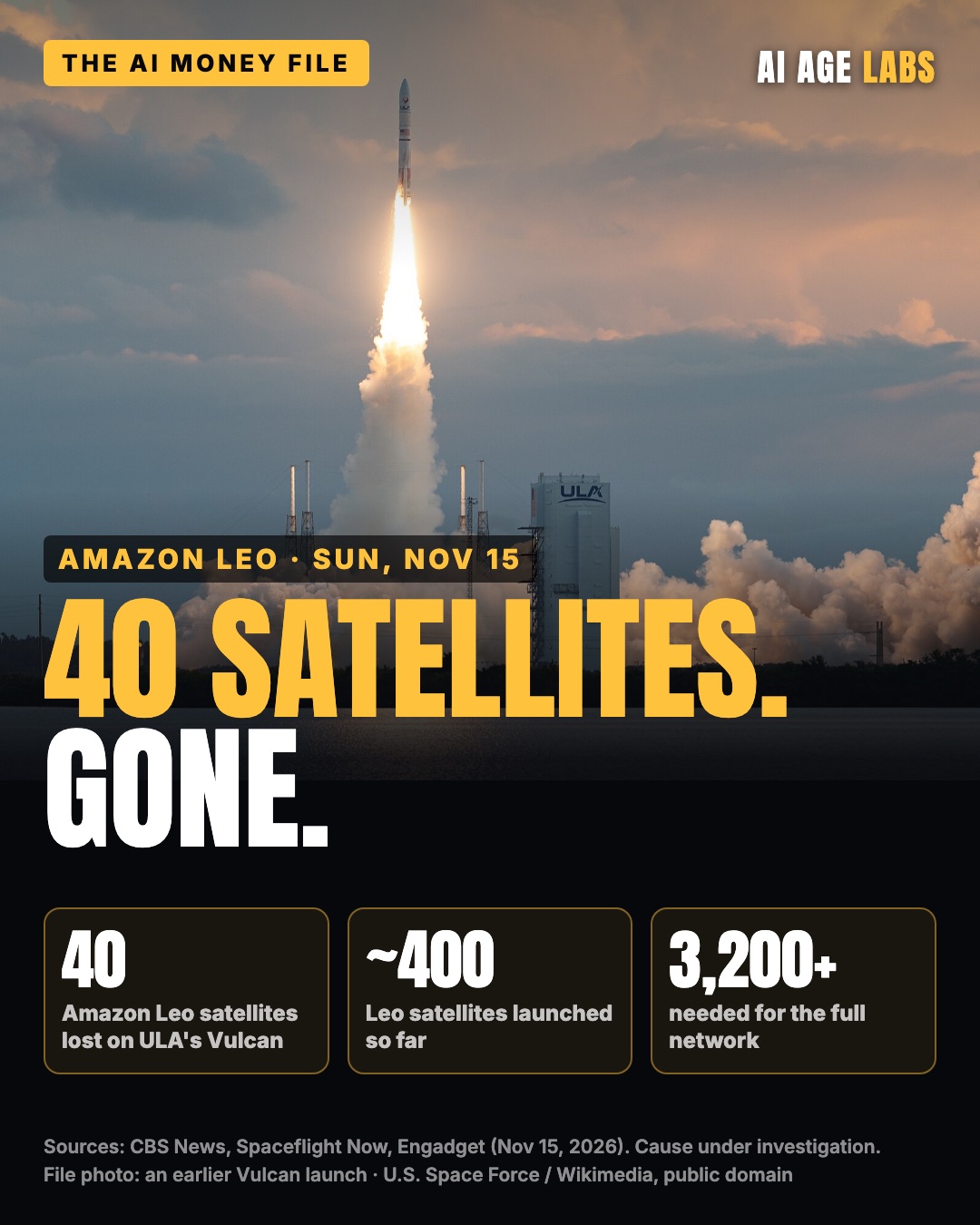
- On Sunday, Nov 15, 2026, a United Launch Alliance (ULA) Vulcan rocket carrying 40 Amazon Leo satellites failed to reach orbit after an anomaly about 10 minutes into flight.
- It is ULA's first outright mission failure since the company was formed in 2006 (CBS News, Spaceflight Now).
- Amazon has about 400 Leo satellites launched and needs more than 3,200 for the full network.
- The cause is not yet known, and no dollar value for the loss has been published.
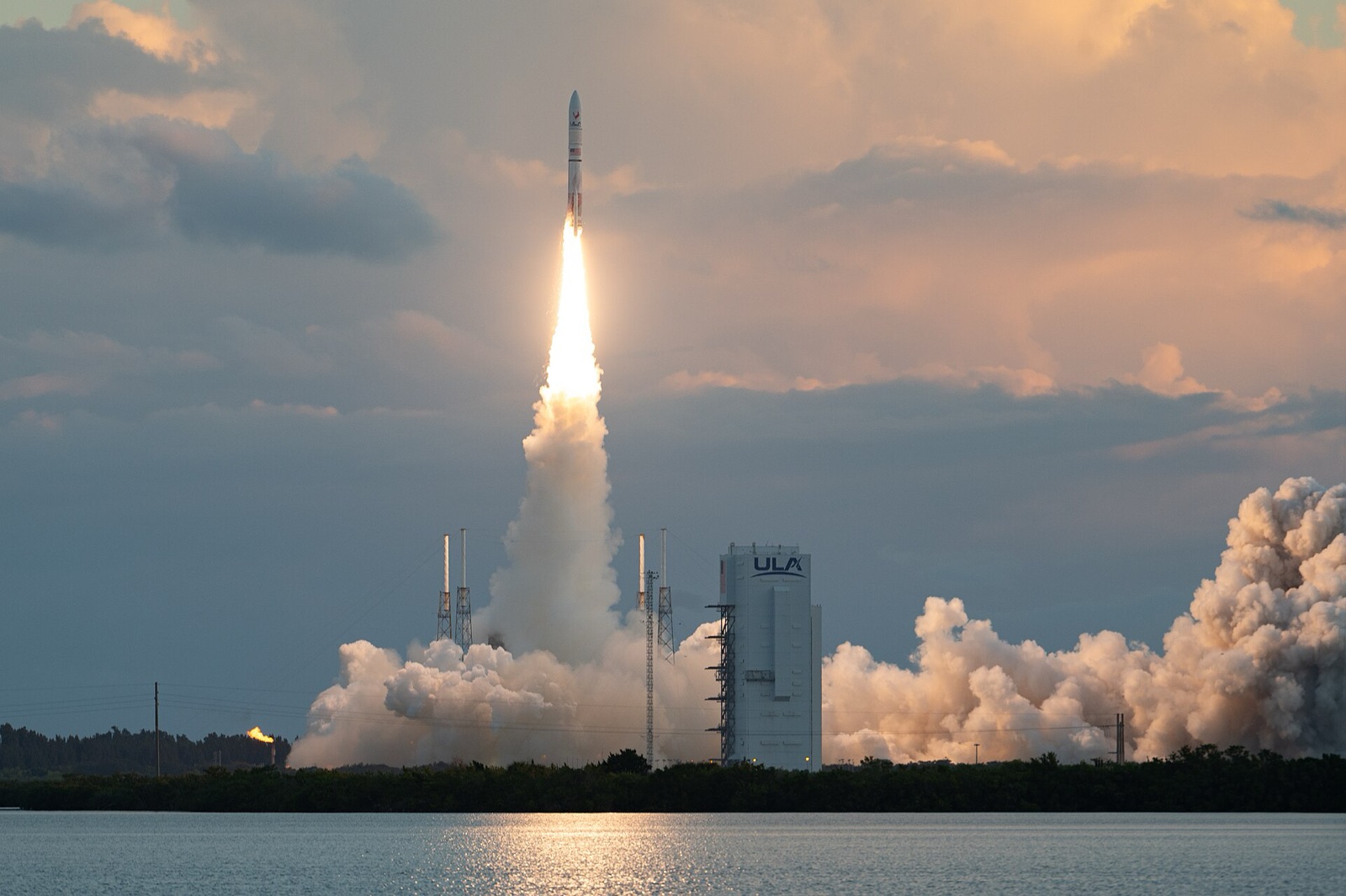
Amazon's plan to take on SpaceX's Starlink just lost a full rocket's worth of satellites. On Sunday, November 15, ULA's Vulcan rocket lifted off from Cape Canaveral Space Force Station in Florida at 12:40 p.m. ET with 40 Amazon Leo internet satellites on board. About ten minutes later, ULA reported an anomaly. The rocket "failed to deliver the Amazon mission to orbit" (CBS News).
What happened
- The rocket: ULA's Vulcan, about 214 feet tall, with two Blue Origin BE-4 engines on the first stage and six Northrop Grumman solid boosters (CBS News).
- The mission: LV-01, the first of 38 Vulcan launches Amazon has bought for its Leo network.
- When it went wrong: about 10 minutes into flight, during the burn of the Centaur upper stage. The first stage appears to have burned longer than planned (Spaceflight Now).
- The cause: unknown. An investigation is under way.
Why it's a big deal for ULA
ULA, a joint venture of Boeing and Lockheed Martin, had never had an outright mission failure since it was formed in 2006 (CBS News, Spaceflight Now). This was only Vulcan's fifth flight, and its first in nine months.
Amazon was gracious in public. In a statement on X, Amazon Leo said "there is risk with any launch," especially on inaugural missions like LV-01, and called ULA "a trusted partner" (via CBS News).
How far Amazon still has to go
Amazon has launched roughly 400 Leo satellites so far, about one-eighth of the 3,200-plus it needs (Engadget reports 3,232). The Nov 15 flight would have taken the total launched to about 436 (CBS News).
To get there, Amazon has booked launches on several rockets (CBS News, Spaceflight Now):
Note the last row: Amazon is paying its main rival, SpaceX, to launch some of the satellites meant to compete with Starlink.
The other rocket problem
Vulcan isn't Amazon's only setback. Blue Origin's New Glenn, another of Amazon's main launchers, has been sidelined since a pad explosion in May, which was traced to an oxygen-valve problem in its BE-4 engines. The BE-4s on Vulcan had been retrofitted with the fix (Spaceflight Now). There is no evidence yet that the engines played any part in Sunday's failure. The problem showed up during the upper-stage burn, and ULA hasn't named a cause.
What we don't know (yet)
- The cause. ULA hasn't said, and anything else is speculation.
- The cost. Neither ULA nor Amazon has published a value for the rocket or the satellites. Be careful with "billion-dollar loss" headlines.
- The deadline. Some coverage mentions an FCC deadline to have half the network up by July 2026. The FCC waived that interim deadline in June, with conditions. The final July 2029 deadline still stands.
- When Vulcan flies again. That depends on the investigation.
So, can anyone catch Starlink?
Amazon has the money, the launch contracts and the patience. What it has lost is time: every grounded rocket is a delay in a race where SpaceX is already far ahead. We'll be watching what the investigation finds and how quickly Amazon can move launches to its other rockets.
Watch the 27-second version: A Rocket Just Destroyed 40 of Amazon's Satellites on YouTube.
Sources: CBS News (William Harwood), Spaceflight Now, Engadget and Space.com (Nov 15, 2026); statements from ULA and Amazon Leo. FCC waiver: reporting by Payload, Via Satellite and DCD (June 2026). Figures are as reported at the time of writing and may be revised.
Not financial advice. This article explains public reporting. Disclosure: AI Age Labs researched and wrote this article with help from AI tools, including Claude by Anthropic. AI Age Labs has no financial relationship with Amazon, ULA or SpaceX.